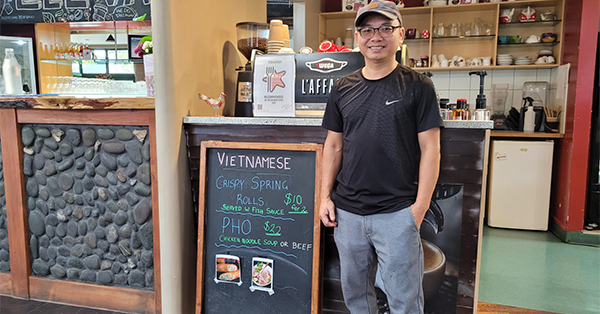
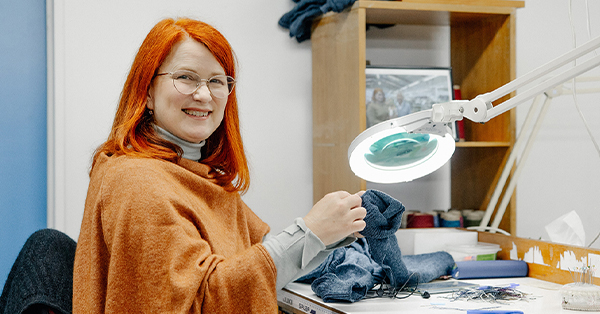
Feeling safe is the most important thing for a Syrian couple who left their war-torn city of Hama in 2011 and arrived in New Zealand 13 years later.
June 20 is World Refugee Day, honouring people who've been forced to flee their home country to escape conflict or persecution.
In 2011, Abid Alrzag Khlif and his wife Halima Alhachoum moved from Hama to Lebanon, where they lived as refugees in the Mediterranean port of Tripoli for about 13 years.
Their sons, Mohamad and Hisham, grew up in this stressful environment, with their parents always worried about the family's safety.
Although Tripoli was only an hour from their home city, they couldn't visit because of the war.
Despite their concerns and while surviving as refugees, Abid developed a TikTok channel that had 22,000 followers.
In Lebanon, he made videos that talked about the refugees' suffering and struggles to educate their children. He had to be careful what he said.
“There was a red line and I didn't cross the red line but did want to tell the truth.”
Cooking is Abid's hobby and he also filmed cooking demonstrations that were popular with his followers.
It wasn't until January 2024 that Abid, Halima, Mohamad (now 16) and Hisham (now 13) arrived in New Zealand and settled in Dunedin.
“We think that the most important thing is to come to a safer place,” Abid says. “Here I feel safe.”
The boys have settled into high school and in 2024, Abid and Halima began learning with English Language Partners.
They are two of 34 learners in our English for Speakers of Other Languages (ESOL) intensive programme in Dunedin.
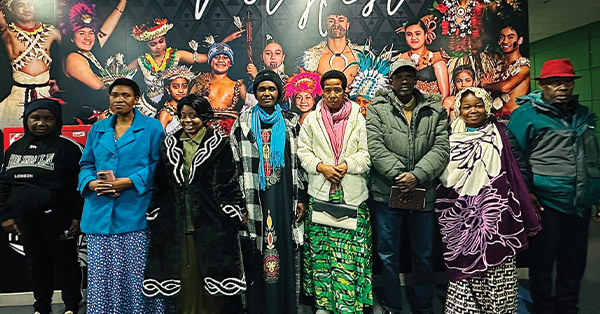
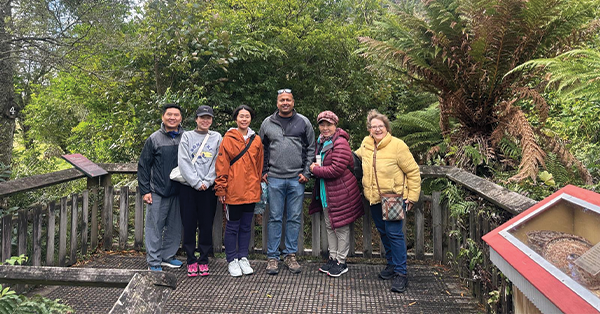
Halima has made friends in her class, which includes people from Fiji, Iraq, Afghanistan, Colombia and Syria.
“I like the tutor, I like studying, I like my friends, my class,” she says.

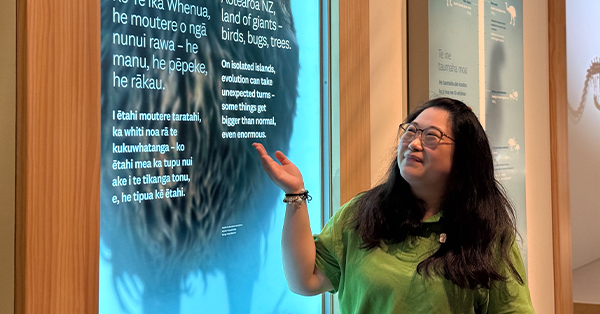
Abid says the group feels like one family and their tutor, Loren Swadosch, is kind.
She explains each subject in a simple way so the learners understand, he says.
They learn reading, writing, speaking and listening and Abid is concentrating on hand-writing.
Sometimes he writes all the letters of a word correctly but makes mistakes with the vowels, such as using “e” instead of “a”.
Abid wants to improve his English language so he can use some basic English words, mixed with Arabic, on his TikTok channel.
Until now, he has used his mobile phone to record the live videos, however he'd like training in how to use a camera. Eventually he'd like to buy one.
His TikToks continue to include politics, international events and “catastrophes” such as climate change.
The talented cook's videos also showcase desserts, chicken dishes, kebabs, and lamb burgers that combine the flavours of Syria and New Zealand.
“Syrian and Kiwi – no problem.”
Abid used to work as a driver. Once he has further developed his English skills, he might get a job as a bus driver or start a food business.
He is keen to continue with his TikTok channel, although is organising a new account after the original one was accidentally deleted.
Abid wants to thank the Starfish Collective for sponsoring his family to settle in Dunedin, and New Zealand for the opportunity to live and study in this country.
He contrasts life here to that in Lebanon, where the boys attended a Government school but didn't receive a proper education because of the war and their refugee status.
During their two-and-a-half years in Dunedin, Abid has noticed his children's English language abilities have improved. He is happy with their schooling and friends.
Instead of constantly thinking about their safety as they did in Lebanon, the family can now consider the future.
“We're looking forward to the future,” Abid says.

When his son Mohamad has finished school, he would like to be a policeman, teacher or doctor.
“When we come to New Zealand, we can do everything,” the Year 11 student says of the opportunities available.
Younger brother Hisham likes chess, Ono and other card games and his favourite subject is maths.
Before arriving in New Zealand, he didn't think he'd be anything significant career-wise, however he says this has changed.
“When I come to New Zealand, I thought that I would be something important. So I will be a politician and then Prime Minister.”
Thank you to Abid and Halima for sharing their story for World Refugee Day on 20 June 2026. Thank you to Sharon Fowler for interviewing Abid and Halima and writing this story with the support of interpreter Mohamad Al Mahary.
All photos were taken by Mikaela Illingworth.